
Smita Patil
Born October 17, 1955
Pune, India
Died December 13, 1986
Years active 1974 - 1985
Spouse(s) Raj Babbar
[show] Awards won
Filmfare Awards
Best Actress: Chakra (1981)
National Film Awards
Best Actress: Chakra (1981)
Best Actress: Bhumika (1978)
Smita Patil (Marathi:?????? ?????) (October 17, 1955 – 13 December 1986) was a leading Indian actress from the 1970s to the 1980s in both Hindi and Marathi cinema.
Along with actresses like Shabana Azmi, she was one of the potent quartet representing India's parallel cinema. In a succession of landmark films like Manthan (1977), Bhumika (1977), Aakrosh (1980) and Chakra (1981).
Patil was also an active feminist (in a distinctly Indian context) and a member of the Women's Centre in Bombay. She was deeply committed to the advancement of women's issues, and gave her endorsement to films which sought to explore the role of women in traditional Indian society, their sexuality, and the changes facing the middle-class woman in an urban milieu.[1]
Contents
[hide]
* 1 Career
* 2 Personal life
* 3 Death
* 4 Awards
* 5 Partial Filmography
* 6 External links
* 7 References
Career
Smita Patil belongs to a generation of great actresses, including Suhasini Mulay and the aforementioned Shabana Azmi and, like them, is strongly associated with the radically political cinema of the 1970s. Her work includes films with parallel cinema directors like Shyam Benegal, Govind Nihalani and Mrinal Sen as well as forays into the more commercial Bollywood cinema of Bombay. Patil was working as a TV news reader and was also an accomplished photographer when Shyam Benegal discovered her.[2]
She was an alumna of the Film and Television Institute of India, Pune. In 1977, she won the National Award for 'Best Actress' for her performance in the Hindi film Bhumika. In her films, Patil's character often represents an intelligent femininity that stands in relief against the conventional background of male-dominated cinema (films like Bhumika, Umbartha, and Bazaar). Smita Patil was also a women's rights activist and became famous for her roles in films that portrayed women as capable and empowered.
As time went on, Patil moved away from her strictly "art house" reputation and, to the consternation of cinemaphiles, began to take parts in mainstream Bollywood extravaganzas.
"I remained committed to small cinema for about five years," Smita herself recalled. "I refused all commercial offers. Around 1977-78, the small cinema movement started picking up and they needed names. I was unceremoniously dropped from a couple of projects. This was a very subtle thing but it affected me a lot. I told myself that here I am and I have not bothered to make money. I have turned down big, commercial offers because of my commitment to small cinema and what have I got in return? If they want names I'll make a name for myself. So I started and took whatever came my way."
Initially her embarrassment showed as she mouthed corny dialogue, donned glitzy costumes and struck the archetypical Bollywood dance poses -- but soon her hard-core professionalism won out. In time she was accepted by commercial filmmakers and from Raj Khosla and Ramesh Sippy to B.R. Chopra, they all agreed that she was "excellent". Her fans, too, grew with her newfound stardom. Patil's glamorous roles in her more commercial films -- such as Shakti and Namak Halaal -- revealed the permeable boundaries between "serious" cinema and "Bollywood" masala in the Hindi film industry.
Her association with artistic cinema remained strong, however. Her arguably greatest (and unfortunately final) role came when Smita re-teamed with Ketan Mehta to play the feisty and fiery Sonbai in Mirch Masala (1987). Smita won raves for playing a spirited spice-factory worker who stands up against a lecherous petty official.
[edit] Personal life
Smita was the daughter of a government minister and a social-worker mother. Born in Pune, Maharashtra, she studied at a Marathi-language school. Her first tryst with the camera was as a television newscaster. Her dusky beauty and large eyes drew attention. Always a bit of a rebel, she would grin when people complimented her on looking lovely in the saris she sported for the telecasts because minutes before going on air, she would have hurriedly wrapped the sari over her jeans.
When Patil became romantically involved with the actor Raj Babbar, a much-married man who eventually left his present wife to marry Patil, she drew severe criticism from her fans and the media, clouding her personal life and throwing her into the eye of a media storm. Overnight, Patil was labeled a "home-breaker" and became the target of barbed criticism. "It was a nightmare for both Smita and Raj and looking back it was ultimately her dignified silence and restraint that becalmed those troubled times. Ushering in hope for a promising, new future -- but that was not to be." [3]
Death
Smita died as a result of childbirth complications on December 13, 1986.
Nearly two decades later, one of India's greatest film directors, Mrinal Sen alleged that she died because of gross negligence.'"[4]
"She passed away even before she could cement her relationship with her just born son, Prateek," a 2002 remembrance noted. "Her son, now a strapping teenager, is not the only 'prateek' (symbol) of her memories. Smita has left behind a rich haul of films that showcase her enormous ability to offer us a glimpse into her soul each time she performed a role."[5]
Awards
* Filmfare Best Actress Award for Chakra in 1981.
* National Film Award - Best Actress for Chakra in 1981.
* National Film Award - Best Actress for Bhumika in 1978.
Partial Filmography
Note: Several of her already completed films were released years after her death right uptill 1989.
* 1975 - Nishant, Charandas Chor
* 1977 - Bhumika, Manthan, Kondura
* 1978 - Bhavani Bhavai, Sarvasakshi
* 1979 - Umbartha (Subah),Gaman,Anvesham,Naxalites
* 1980 - Aakrosh, Sadgati,
* 1981 - Chakra
* 1982 - Bazaar,Namak Halaal, [[Shakti (1982 film)| Shakti], Awam
* 1983 - Mandi, Arth, Ardh Satya
* 1984 - Pet Pyar Aur Paap, Aaj Ki Awaaz, Kasam Paida Karne Wale Ki, Qayamat, Sharaabi, Aaj Ki Awaaz
* 1985 - Aakhir Kyun, Ghulami, Mirch Masala, Chidambaram
* 1987- Dance Dance, Thikana, Insaniyat Ke Dushman, Nazrana
* 1988- Waris
* 1989 - Galiyon Ka Baadshah
External links
* Smita Patil at the Internet Movie Database
* Article on Smita Patil
Awards
Filmfare Award
Preceded by
Rekha
for Khoobsurat Best Actress
for Chakra
1981 Succeeded by
Padmini Kolhapure
for Prem Rog
National Film Award
Preceded by
Laxmi
for Sila Nerangalil Sila Manithargal Best Actress
for Bhumika
1978 Succeeded by
Sharada Urvashi
for Nimajjanam
Preceded by
Shobha
for Pasi Best Actress
for Chakra
1981 Succeeded by
Rekha
for Umrao Jaan
References
1. ^ "Reminiscing Smita Patil," http://movies.indiainfo.com/tales/smitapatil.html
2. ^ "Indian Cinema - Smita Patil", SSCnet UCLA
3. ^ "A Blazing Talent Remembered," The Hindu, 20 December 2002.
4. ^ "Memories from Mrinal da," Rediff.com, 2 February 2005.
5. ^ Raheja, Dinesh. "Raw stock, rare appeal: Smita Patil," Rediff.com, July 23, 2002.
Source :- Wikipedia
Thursday, February 28, 2008
Smita Patil

Tuesday, February 26, 2008
Madhuri Dixit

Madhuri Dixit (Marathi: माधुरी दीक्षित) (born as Madhuri Shankar Dixit on May 15, 1967) is an award winning Indian Bollywood actress and one of the biggest stars of the Indian film industry. Throughout the late 1980s and 1990s, she dominated Hindi cinema as a leading actress, appearing in many hit films. She is considered to be an icon of the Bollywood film industry
Film career
Maduri Dixit made her acting debut in Abodh (1986). After a few minor and supporting roles the film which shot her to fame was the hit film Tezaab (1988). She then went on to star in the hit films such as Ram Lakhan (1989), Parinda (1989), Tridev (1989), Kishen Kanhaiya (1990), Dil (1990), Saajan (1991), Beta (1992), Khalnayak (1993), the Bollywood blockbuster Hum Aapke Hain Kaun! (1994) and Raja (1995).
After a year of little success, she appeared as Pooja in the blockbuster Dil To Pagal Hai (1997), for which she won her fourth Filmfare Best Actress Award.[2] In that same year, Dixit starred in Prakash Jha's critically acclaimed Mrityudand. The film straddled the boundary between an art and a commercial film. It won the Best Feature Film at the Cinéma Tout Ecran in Geneva, the Bangkok Film Festival and the Sansui Awards (Critics' Choice). Her performance in the film also landed her Best Actress awards at the Star Screen Awards and Sansui Awards.
Her dance sequences accompanying many famous Bollywood songs such as Ek Do Teen (from Tezaab), Bada Dukh Diya (from Ram Lakhan), Dhak Dhak (from Beta), Chane Ke Kheth Mein (from Anjaam), Choli Ke Peechche (from Khalnayak), Akhiyan Milau (from Raja), Piya Ghar Aya (from Yaarana), Key Sera (from Pukar), Mar dala (from Devdas), and many others have received abundant critical acclaim.
In 2002, she starred in Devdas, with actor Shahrukh Khan and Aishwarya Rai. Her performance was applauded and earned her a Filmfare Best Supporting Actress Award. The film attracted worldwide attention and was featured at the Cannes Film Festival.[3].
The following year a film named after her, Main Madhuri Dixit Banna Chahti Hoon!, was released[4] in which a woman (played by Antara Mali) aspires to become the new Madhuri Dixit by trying her luck in the Bollywood industry.
On February 25, 2006 she performed on stage for the first time in six years at the Filmfare Awards to music from her last movie Devdas.[5] Her performance was choreographed by Saroj Khan.
Madhuri Dixit has been the muse for the famous Indian painter M.F. Hussain who considers her the epitome of the Indian woman. She also appeared in his film, Gaja Gamini (2000). The film was intended as a tribute to Dixit.[6]
On December 7, 2006, Dixit returned to Mumbai along with her husband and sons to start filming for Aaja Nachle (2007).[7] The film released in November 2007 and despite the critics panning it, Dixit's performance was well received, with the New York Times commenting about her that "she's still got it".[8][9]
On Women's International Day in 2007, Dixit topped the list of the Best Bollywood Actresses Ever.[10]
Personal life
Madhuri Dixit is a native of Mumbai, India. She was born Madhuri Shankar Dixit to Shankar and Snehlata Dixit, of a Marathi Chitpavan Brahmin family. Dixit attended Parle College and wanted to be a micro-biologist.[11] She is trained as a Kathak dancer, in the Indian classical tradition.
She married an Indian-American, Dr. Sriram Madhav Nene, in 1999. A UCLA-trained cardiovascular surgeon who practices in Denver, Nene is also from a Marathi Konkanastha Brahmin family. She has two sons, Arin (born in March 2003 in Colorado) and Ryan (born on March 8, 2005 in Colorado).
She has two elder sisters, Rupa and Bharati, and an elder brother, Ajit. Madhuri now lives with Dr. Nene and her two children in Denver, Colorado, USA.
Awards and nominations
Filmfare Awards
1990: Filmfare Best Actress Award for Dil.
1992: Filmfare Best Actress Award for Beta
1994: Filmfare Best Actress Award for Hum Aapke Hain Kaun
1997: Filmfare Best Actress Award for Dil To Pagal Hai
2002: Filmfare Best Supporting Actress Award for Devdas
Star Screen Awards
1994: Star Screen Award Best Actress for Hum Aapke Hain Kaun!
1995: Star Screen Award Best Actress for Raja
1997: Star Screen Award Best Actress for Mrityudand
2002: Star Screen Award Best Supporting Actress for Devdas
Zee Cine Awards
1998: Best Actress for Dil To Pagal Hai
2002: Best Supporting Actress for Lajja
Awards nominated
1988: Filmfare Best Actress Award for Tezaab
1989: Filmfare Best Actress Award for Prem Pratigya
1991: Filmfare Best Actress Award for Saajan
1993: Filmfare Best Actress Award for Khalnayak
1995: Filmfare Best Actress Award for Raja
1995: Filmfare Best Actress Award for Yaraana
1997: Filmfare Best Actress Award for Mrityudand
2000: Filmfare Best Actress Award for Pukar
2000: Star Screen Award Best Actress for Pukar
2000: Zee Cine Award Best Actor- Female for Pukar
2000: IIFA Best Actress Award for Pukar
2001: Filmfare Best Supporting Actress Award for Lajja
2003: Star Screen Award Best Supporting Actress for Devdas
2003: Zee Cine Award Best Actor- Female for Devdas
2008: Stardust Star of the year- Female for Aaja Nachle
2008: Filmfare Best Actress Award for Aaja Nachle
Honours and recognitions
2001 - National Citizen's Award
2007 - "Bollywood's Best Actress Ever"2008 - Padma Shri, India's fourth highest civilian award by the Government of India [2]
Filmography
Year
Film
Role
Other notes
1986
Abodh
Gowri
Swati
1987
Hifazat
Janki
Uttar Dakshin
Awara Baap
1988
Mohre
Khatron Ke Khiladi
Kavita
Dayavan
Neela Velhu
Tezaab
Mohini
Nominated, Filmfare Best Actress Award
1989
Vardi
Jaya
Ram Lakhan
Radha
Prem Pratigyaa
Laxmi
Nominated, Filmfare Best Actress Award
Ilaaka
Vidya
Mujrim
Sonia
Tridev
Divya Mathur
Kanoon Apna Apna
Bharathi
Parinda
Paro
India's official entry to the Oscars
Paap Ka Anth
1990
Maha Sangram
Kishen Kanhaiya
Anju
Izzatdaar
Dil
Madhu Mehra
Winner, Filmfare Best Actress Award
Deewana Mujh Sa Nahin
Anita
Jeevan Ek Sangharsh
Madhu Sen
Sailaab
Dr. Sushma
Jamai Raja
Rekha
Thanedaar
Chanda
1991
Pyaar Ka Devata
Devi
Khilaaf
Sweta
100 Days
Devi
Pratikaar
Madhu
Saajan
Pooja
Nominated, Filmfare Best Actress Award
Prahaar
Shirley
1992
Beta
Saraswati
Winner, Filmfare Best Actress Award
Zindagi Ek Jua
Juhi
Prem Deewane
Shivangi Mehra
Khel
Seema/Dr.Jadi Buti
Sangeet
1993
Dharavi
Dreamgirl
Sahibaan
Sahibaan
Khalnayak
Ganga (Gangotri Devi)
Nominated, Filmfare Best Actress Award
Phool
Dil Tera Aashiq
Sonia Khanna/Savitri Devi
Aansoo Bane Angaray
1994
Anjaam
Shivani Chopra
Nominated, Filmfare Best Actress Award
Hum Aapke Hain Koun...!
Nisha Choudhury
Winner, Filmfare Best Actress Award
1995
Raja
Madhu Garewal
Nominated, Filmfare Best Actress Award
Yaraana
Lalita/Shikha
Nominated, Filmfare Best Actress Award
1996
Prem Granth
Kajri
Paapi Devta
Raj Kumar
1997
Koyla
Gauri
Mahaanta
Jenny Pinto
Mrityudand
Phoolva
Nominated, Filmfare Best Actress Award
Mohabbat
Shweta Sharma
Dil To Pagal Hai
Pooja
Winner, Filmfare Best Actress Award
1998
Bade Miyan Chhote Miyan
Madhuri Dixit
Special appearance
Wajood
Apoorva Choudhury
1999
Aarzoo
Pooja
2000
Pukar
Anjali
Nominated, Filmfare Best Actress Award
Gaja Gamini
Gaja Gamini/Sangita/Shakuntala/Monika/Mona Lisa
2001
Yeh Raaste Hain Pyaar Ke
Neha
Lajja
Janki
Nominated, Filmfare Best Supporting Actress Award
2002
Hum Tumhare Hain Sanam
Radha
Devdas
Chandramukhi
Winner, Filmfare Best Supporting Actress AwardIndia's official entry to the Oscars
2007
Aaja Nachle
Diya
Nominated, Filmfare Best Actress Award
Source: Wikipedia
Saturday, December 1, 2007
Lata Mangeshkar

Dinanath Mangeshkar, her father, owned a theatrical company and was a reputed classical singer, a disciple of the Gwalior school. He gave her singing lessons from around the age of five. She also studied with Aman Ali Khan Sahib and later Amanat Khan. Her God-given musical gifts meant that she could master the vocal exercises effortlessly on first pass and from early on she was recognized as being highly gifted musically.
However when her father died in 1942, the onus of being the breadwinner of the family fell on Lata. Between 1942 and 1948 she acted in as many as 8 films in Hindi and Marathi to take care of the family's economic problems. She also made her debut as a playback singer in the Marathi film Kiti Hasaal (1942) but the song was edited out!
The first Hindi film in which she gave playback was Aap ke Sewa Main (1947) but her singing went unnoticed. When Lata entered the Film Industry, heavier Punjabi voices like Noor Jehan, Shamshad Begum and Zohrabai Ambalewali ruled the Industry. Ironically Lata was even rejected for Shaheed (1948) by producer S. Mukherjee who complained that her voice was too thin! However Ghulam Haider unable to use her in Shaheed gave Lata her breakthrough song with Dil Mera Toda from Majboor (1948).
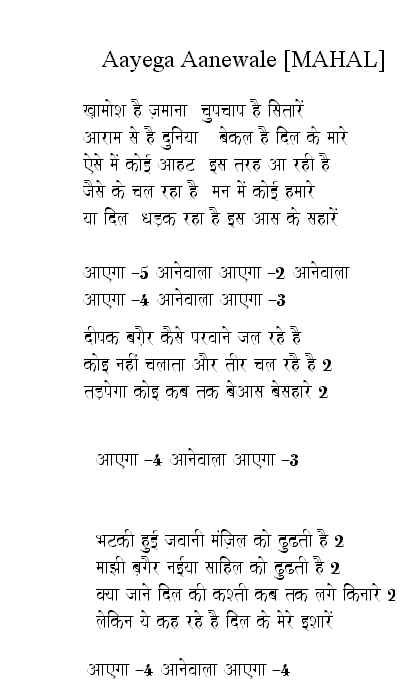
1949 saw the release of four films. Barsaat, Andaaz (1949) , Dulari and Mahal. The songs of all four films were runaway hits particularly Aaega Aanewaalaa from the last mentioned. By 1950 the Lata wave had changed the Industry. Her high-pitched singing rendered obsolete the heavy basy nasal voices of the day. Only Geeta Dutt and to a certain extent Shamshad Begum survived the Lata onslaught. Asha Bhosle too came up in the late 1950s and the two sisters were the queens of Indian playback singing right through to the 90s.
Lata's initial style of singing was reminiscent of Noor Jehan but she soon got over that to evolve her own distinguished style. With her search for perfection she corrected her Urdu by hiring a tutor!
Her phenomenal success made Lata the most powerful woman in the Film Industry. She waged battle with Mohd. Rafi in the 1960s and stopped singing with him over the issue of royalty to playback artistes. She refused to sing for S.D. Burman from 1957 - 62 and such was her clout that she had her way and they came back to her.
Though Lata sang under the baton of all the top composers barring O.P. Nayyar and with all the top playback artistes of the day, special mention must be made of her work for C. Ramchandra who made her sound her sweetest and Madan Mohan who challenged her voice like no other music director. The 1960s and 70s saw Lata go from strength to strength even as there were accusations of her monopolizing the field.
From the 80s Lata cut down on her workload to concentrate on her shows abroad. Lata Mangeshkar sings infrequently now but even today the songs of some of the biggest hits of today Dil To Paagal Hai (1997), Maachis (1997), Hum Aapke Hain Kaun (1994) and Dil Se (1998) are sung by her. From Nargis to Kajol she's sung for them all. Lata Mangeshkar is in fact that rare artist who has realized her search for excellence.
A Phalke Award winner for her contribution to Indian Cinema, the latest jewel in Lata's crown is having India's highest civilian award, the Bharat Ratna conferred on her.
Duet List
MOVIE SONG DUET WITH
1 2 Ka 4 Khamoshiyan Gungunane Lagi Sonu Nigam
Aaeye Aao Chale-Chale Vaha Mubarak Begum
Aaeye Jiya Dole Kisi Ke Khayalon Mein Shaukat Hyderi
Aag Aur Shola Aaj Subah...Ki Tune Mujhe Yaad Kiya Mohd. Aziz
Aagosh Bansuriya Kahe Bajayee Sudha Malhotra
Aaina Aaina Hai Mera Chehra Asha Bhosle & Suresh Wadkar
Aaina Dil Ne Dil Se Kya Kaha Nitin Mukesh
Aaina Goriya Re Goriya Jolly Mukherjee
Aalaap Mata Saraswati Sharda Dilraj Kaur
Aandhi Is Modh Se Jaate Hain Kishore kumar
Aandhi Tere Bina Zindagi Se Shikawa Kishore kumar
Aap Ki Kasam Jai Jai Shiv Shankar Kishore Kumar
Aap Ki Kasam Karwate Badlte Rahe Sari Raat Hum Kishore Kumar
Aap Ki Khatir Pyara Ek Bangala Ho Bappi Lahiri
Abhimaan Loote Koi Man Ka Nagar Manhar
Abhimaan Tere Mere Milan Ki Raina Kishore kumar
Abhimaan Teri Bindiya Re Mohd Rafi
Albela Shola Jo Bhadke Dil Mera Dhadke C.Ramchander
Amar Samadhi Raag Maalika Salamat Ali
Anand Aur Anand Nasha Hain, O mujhe Tumhara Abhijeet
Anmol Batao Tum Kaun Ho, Khayalon Mein Jo Udit Narayan
Anmol Ratan Sajan Aaye Aadhi Raat Nirmala Devi
Anmol Ratan Shikwa Tera Main Gaoon Talat Mahmood
Anmol Ratan Yaad Aanewale Phir Yaad Aye Talat Mahmood
Amar Deep Dekh Hume Aawaaz Na Dena Mohd. Rafi
Apnapan Aadmi Musafir Hain Aata Hain Mohd. Rafi
Aradhana Bagon Mein Bahar Hain Mohd. Rafi
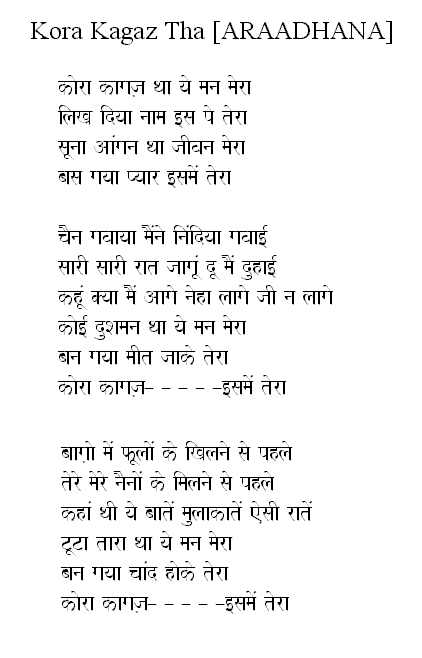
Aradhana Kora Kagaz Tha Dil Mera Kishore kumar
Aradhangani Pyar Mein Milna Sanam Hota Hain Subeer Sen
Avtaar Din Mahene Saal Guzarte Jayenge Kishore Kumar
Awara Dum Bhar Udhar Jo Dekhe O Chanda Mukesh
Baaton Baaton Mein Uthe Sab Ke Kadam,Dekho Rum Pum-Pum Amit Kumar & Pearl Padamsee
Badi Bahu Munshi Daroga Ha Ji Ek Arji Likho Chandbala
Badi Behen Chup-Chup Khade Ho Zaroor Koi Baat Premlata
Badi Maa Janani Janambhoomi Swargadarpi Meenakshi
Baiju Bawra Door Koi Gaaye Mohd. Rafi & Shamshad Begum
Baiju Bawra Jhoole Mein Pawan Ki Aayi Bahar Mohd. Rafi
Baiju Bawra Too Ganga Ki Mauj Mohd. Rafi
Balam O Pardesi Musafir Kise Karta Hain Suraiya
Baradari Dil Humse Veh Lagaye Mubarak
Barood Atkan Batkan Dahi Chatokan,Raja Gaye Honey Irani
Basant Bahar Kar Gaya Re Asha Bhosle
Basant Bahar Nain Mile Chain Kahan Manna Dey
Bazaar Phir Chiddi Raat ,Baat Phoolon Ki Talat Aziz
Bazaar Zara Sun Lo Hum Apne Pyar Ka Afsana Rajkumari Dubey
Bhai-Bhai Sharabi Ja Ja Ja, O Deewane Ashok Kumar
Biraj Bahu Tera Ghar Aabad Rahe Shyamlal Mitra
Bobby Jhooth Bole Kauwa Kaate Shailendra Singh
Buzdil Dar Lage Duniya Se Talat Mahmood
Chand Kabhi Aaj Kabhi Kal Kabhi Parson Suman Kalyanpur
Chand Ka Tukda I am very very Sorry Tera Naam Vipin Sachdev
Chandni Sheheron Mein Se Sheher Suna..Dilli Vinod Rathod
Chandni Tere Mere Hoton Pe Bablaa Mehta
Chori-Chori Aaja Sanam, Madhur Chandni Mein Hum Manna Dey
Chori-Chori Jaha Main Jati Hoon Manna Dey
Chunariya Ankh Meri Ladh Gayi Re Inder Goyal
Daag Yaar..,Ni Main Yaar Manana Nai Chahe Meenu Purshottam
Darr Chota Sa Ghar Hain Yeh Magar Abhijeet
Darr Tu Mere Samne Main Tere Samne Udit Narayan
Dekh Kabira Roya Hum Panchhi Mastane Ek Hi Dhun Hain Seeta Agarwal
Dhua Kabhi Yeh To Mujhse Puchho Krishan Goyal
Dil Tera Deewana Dil Tera Deewana Hain Sanam Mohd. Rafi
Dil To Pagal Hai Dil To Pagal Hai Udit Narayan
Dil To Pagal Hai Arey Re Arey Udit Narayan
Dillagi Prem Hain,Piya Man Ki Ek Madhur.. Nitin Mukesh
DDLJ Na Jaane Mere Dil Ko Kya Ho Gaya Udit Narayan
DDLJ Tujhe Dekha To Yeh Jana Sanam Kumar Sanu
Dost Kaise Jeete Hain Bhala M.Rafi & Shatrughan Sinha
Dream Girl Chhupi-Chhupi Khele Aao Padmini Kolhapure
Dushman Aawaz Do Humko Udit Narayan
Dushman Pyar Ko Ho Jane Do Kumar Sanu
Ek Duje Ke Liye Hum Bane.. Ek Duje Ke Liye S.P.Balasubrahmanyam
Ek Duje Ke Liye Hum Tum Dono Jab Mil Jayenge S.P.Balasubrahmanyam
Ek Duje Ke Liye Solah Baras Ki Bali Umar Ko Salaam Anoop Jalota
Ek Duje Ke Liye Tere Mere Beech Mein Kaisa Hain S.P.Balasubrahmanyam
Ek Hasina Do Deewane Do Kadam Tum Bhi Chalo Mukesh
Ek Nayi Paheli Isko Na Koi Boojh Sake Kavita Krishnamurthi
Ek Pal Main To Sang Jaon Banvaas Bhupen Hazarika
Ek Thi Ladki Larra Lappa Lai Rakhda Mohd Rafi & G.M.Durrani
Ek Thi Ladki Hum Chale Door M.Rafi & Satish Batra
Farz Dekhe Bhi To Kya Dekhe Udit Narayan
Gajre Chali Dulhan Baratiyon Ke Peeche Ira Nagrath
Gambler Choodi Nahin Yeh Dil Hai Mera Kishore Kumar
Gateway Of India Dekhta Chala Gaya Main Zindagi Ki M.Rafi & Johnny Walker
Gazab Nazar Se Mil Hi Jaayegi Nazar Zohrabai & Kalyani
Gazal Unse Nazre Milli Meenu Purshottam
Ghar Hoo Hoo.. Halka Sa Nasha Rehta Hain Vinod Mehra
Ghulami Jihal-e-Mazki..Sunai Deti Hai Jiski Shabbir Kumar
Girlfriend Kehte Hain Ise Paisa Baccho Hemant Kumar & Ranu Mukherjee
Girls School Bar-Bar Tum Soch Rahi Ho Shankardas Gupta
Gopichand Jasoos Oye Balle-Balle, Main Lambardar Ki .. Kamlesh Awasthi
Guide Gaata Rahe Mera Dil Kishore Kumar
Gunaho Ka Faisla Kal Tak Jo Tha Ek Sapna Pankaj Udhas
Guzara Rang Rangiley Pyare-Pyare Laye Hum Hridaynath Mangeshkar
Hamari Kahani Jai Shyam ,Radheshyam Balak Ram
Hamdard Pi Bin Soona Ri Manna Dey
HareRama HareKrishna Phoolon Ka Taaron Ka Sab Ka Kehna Hai R.D.Burman
Hatya Zindagi Mahek Jati Hain Yesudas
Hawalat O Tere Pyar Pe Bharosa Kar To Loo Dilip Tahil
Hum Aapke Hain Kaun Aaj Hamare Dil Mein .. Samdhan Hain Kumar Sanu
Hum Aapke Hain Kaun Didi Tera Devar Deewana S.P.Balasubrahmanyam
Hum Aapke Hain Kaun Dulhe Ki Saaliyon S.P.Balasubrahmanyam
Hum Aapke Hain Kaun Pehla-Pehla Pyar S.P.Balasubrahmanyam
Hum Aapke Hain Kaun Tumse Juda Hokar Mujhe Door Jana S.P.Balasubrahmanyam
Hum Aapke Hain Kaun Wah-Wah Ramji S.P.Balasubrahmanyam
Hum Aapke Hain Kaun Yeh Mausam Ka Jaadu Hai, Mitwa S.P.Balasubrahmanyam
Hum Hain Lajawab Duniya Badal Gayi Hain Anwar
Jaal Yeh Raat Yeh Chandni Hemant Kumar
Jai Bangladesh Duniya Walon O Duniya Walon Sushma Shreshth
Jawahar Yeh Pyar Ka Zamana Dwijain Mukherjee
Jawani Deewani Agar Saaz Chedha To Tarane Kishore Kumar
Jeet Babloo Miyan O Babloo Rajendra Nath
Jewel Thief Aasman Ke Neeche Kishore Kumar
Jewel Thief Dil Pukare Aa re - Aa re Mohd. Rafi
Jhanjar Ja Ri Ja Nindiya Madhubala Jhaveri
Junglee Din Sara Guzara ... Shaba khair Mohd. Rafi
Kabhie-Kabhie Tere Chehre Se Nazar Nahi Kishore Kumar
Kaidi No:911 Meethi-Meethi Baaton Se Bachna Daisy Irani
Kaidi No:911 Yeh Khile-Khile Taare Mehmood
Kala Pathar Dhoom Mache Dhoom, Aaj Ki Raina M.Rafi,Mahendra & S.K.Mohan
Kinara Naam Ghum Jaayega Chehra Yeh Badal Bhupinder
Khidki Khushiyan Manaye Kyon Na Hum Shamshad & Mohan Tara
Kranti Zindagi Ki Na Toote Ladii, Pyar Kar Nitin Mukesh
Laila Geeton Se Sargam Manmohan Singh
Ladli Chota Sa Mandir Bana Meena Kapoor
Ladli Agre Ko Ghagro Mangwa De Raja Ashalata
Lagaan O Palanhaare Udit Narayan
Lamhe Kabhie Main Kahu Hariharan
Lamhe Morni Baga Ma Bole Ila Arun
Lamhe Panchi Badal Premi Ke Pagal Suresh Wadkar
Lahore Sun Lo Sajan Meri Baat Karan Deewan
Lajawab Dil Na Haathon Se Nikal Jaye Binapani Mukherjee
Lajawab Do Din Bahaar Hain,Do Din Ka Pyar.. Anil Biswas
Love Story Dekho Maine Dekha Hain Yeh Ek Sapana Amit Kumar
Love Story Yaad Aa Rahi Hain Amit Kumar
Maang Na Jane Aaj Kyon Ghabra Rahi Ho Uma
Madari Akele Mohe Chhod Na Jana Kamal Barot
Madhumati Chad Gayo Papi Bichhua Manna Dey
Madhumati Dil Tadap Tadap Ke Mukesh
Majboor Har Shay Pe Jawani Hain Geeta Dutt
Malati Madhav Chabi Teri Madhur..Man Mein Mere Sudhir Phadke
Manohar Rajni Hain Taaron Bhari T.S.Moti
Main Bhi Ladki Hoon Chanda Se Hoga Vo Pyara P.B.Srinivasan
Maine Pyar kiya Aate-Jate, Haste Gaate S.P.Balasubrahmanyam
Maine Pyar kiya Ja-Ja..Kabootar Ja Ja S.P.Balasubrahmanyam
Maine Pyar kiya Tum Ladki Ho Main Ladka Hoon S.P.Balasubrahmanyam
Maum Ki Gudiyan Baagon Mein Bahar Aayee Anand Bakshi
Mausam Dil Dhoondta Hai Phir Wohi Bhupinder
Mehboob Ki Mehendi Jhilmil Taaron Ki Baaraton Mein Hemlata
Meherbani Tumse Ho Gaya Pyar Talat Mahmood
MeraPatiSirfMeraHai Maine Tujhe Khat Likha O Sajana S.P.Balasubrahmanyam
Mera Saaya Nainowali Ne Haye Mera Dil Sadhana & Sunil Dutt
Mohhabatein Humko Humise Chura Lo Udit Narayan
Mohhabatein Duniya Mein..Mar Bhi Jaye Pyarwale Udit Narayan
Mugal-e-Azam Teri Mehfil Mein Qismat Aazama Ke Shamshad Begum
Musafir Laagi Na Chhoote Chahe Jiya Jaye Dilip Kumar
Pakeezah Chalo Dildar Chalo Chand Ke Par Mohd. Rafi
Palki Beemar-e-Mohabbat Mumtaz
Patita Yaad Kiya Dil Ne Kaha Ho Tum Hemant Kumar
Pilpilli Saheb Dil Na Dukhana Savariya Shaminder
Piya Milan O Saathi Re , Tu Aaja Re Usha & Jagmohan Bakshi
Prem Rog Bhanvre Ne Khilaya Phool Suresh Wadkar
Prem Rog Mohabbat Hai Kya Cheez Suresh Wadkar
Pyar Ki Manzil Aye Chand Zara Sun Le Husanlal Bhagatram
Raag Rang Karte Hain Ishare Falak Se Chand Tare Trilok Kapoor
Raat Aur Din Dil Ki Girah Khol Do Manna Dey
Raj Mukat Mithai Le Lo Babu, Mithai Le Lo Raja Rajagul
Ram Hanuman Yudh Aaj Agar Meri Laaj Gayi Dilip Dholakiya
Ricky Aao Na Kuch Baat Kare Vishal Goswami
Roti KapadaAur Makan Usne Kaha Tu Kaun Hain Mukesh,JohnnyBabu & Chanchal
Sagai Mohabbat Mein Aise Zamane Talat Mahmood
Sagar Sangam Patit Pawan Ganga Kamleshwar
Sahara Chham-Chham Karti Chali Voh Aarti Mukherjee
Sangam Har Dil Jo Pyar Karega Mukesh & Mahendra Kapoor
SangeetSamrat Tansen Pardesi Ghar Aay Ke Mahendra
Sanyasi Sitare Doobane Lage Premnath
Sanyasi Sun Bal-Brahmachari Mukesh
Samadhi Gore-Gore O Banke Chore Amirbai Karnataki
Saraswati Chandra Phool Tumhe Bheja Mukesh
Sargam Dafliwale Dafli Baja Mohd. Rafi
Sargam Sa Re..Tinak Tin Tani,Do Din Ki Saraswati Rane
Satta Bazaar Tumhe Yad Hoga Kabhi Hum mile The Hemant Kumar
Sati-Savitri Tum Gagan Ke Chandrma Manna Dey
Satwaan Aasmaan Tum Kya Mile Janeja, Pyar Zindagi Se Udit Narayan
Sawan Bhado Kaleja Tham Lo Ab Zohrabai Ambalewali
Sawan Bhado Yeh Raah-e-Mohabbat...Royegi Vo Hi.. S.D.Batish
Shabab Chandan Ka Palana Hemant Kumar
Shabab Man Ki Been Matwari Mohd. Rafi
Shaheed Maali Chod De Re Madan Mohan
Shakti Jaane Kaise Kab Kahan Ikrar Ho Gaya Kishore Kumar
Shart Woh Chand Chupke Karta Hai.. Dekho Hemant Kumar
Shenshah Jane Do Jane Do Mujhe Jana Hain Mohd. Aziz
Shokhiyan Aae Barkha Bahar, Pade Boondan Pramodani
Shree 420 Eechak Dana Beechak Dana Mukesh
Shree420 Pyar Hua Ikraar hua Manna Dey
Shree 420 Ramaiya Vasta Vaiya Mohd Rafi & Mukesh
ShriChaitanyaMahapr. Veh Gokul Ka Gwala Tha Dhananjay
Silsila Yeh Kaha Aa Gaye Hum Amitabh Bachhan
Sindoor Naam Sare Mujhe Bhool Jane Lage Mohd. Aziz
Sindoor Patjhar Sawan Basant Bahar Mohd.Aziz
Swami Dada Ho Sun Jeenewale Jeena Hain To Kishore Kumar & Annet
Subah Ka Tara Haklo Ka Suno Fasana Chandrakanta
Subhadra Main Khilli-Khilli Phoolwari Shanti Apte
Sur Sangam Jaon Tore Charan Kamal Par Vaari Rajan Mishra
Taj Mahal Jo Vada Kiya Jo Nibhaana Parega Mohd Rafi
Tarana Bol Papeehe Bol, Hain Kaun Mera Sandhya Mukherjee
Taqdeer Saat Samandar Par Se Sulaxana Pandit,Meena Patki & Ila
Taqdeer Saat Samandar Par Se Sulaxana Pandit & Usha Khanna
Thanedar Aur Bhala Main Kya Mangu Pankaj Udhas
Thanedar Jeena Hain Do Has Ke Jeeyo Pankaj Udhas
Ustad Tehzeeb,Sharafat,Aadmiyat, Dhanwano Anu Malik
Utsav Man Kyon Behka Re Behka Asha Bhosle
Woh Saat Din Chup Reh Sakta..,Kangna O Ho Kangna Shabbir Kumar
Woh Saat Din Pyar Kiya Nahi Jaata Ho Jata Shabbir Kumar
Yaadon Ki Baarat Yaadon Ki Baraat Nikli Hain Aaj Padmini & Shivangi
Yeh Dillagi Hoton Pe Bas Tera Naam Hain Kumar Sanu
Yeh Dillagi Naam Kya Hain Kumar Sanu
Yeh Gulistan Hamara Raina Soyi-Soyi, Naina Jage-Jage S.D.Burman & R.D.Burman
Solo Songs List
MOVIE SONG
Aadmi Kal Ke Sapne
Aadmi Kaari Badariya
Aah Jo Main Janti Unke Liye
Aah Raja Ki Aayegi Baraat
Aah Sunte The Naam
Aah Yeh Shaam Ki Tanhaiyan
Aakash Deep Dil Ka Diya Jalake Gaya
Aaina Yeh Raat Khush-Naseeb Hai
Aakhri Khat Baharon, Mera Jeevan Bhi
Aakhri Khat Mere Chanda Mere Nanhe
Aan Aaj Mere Man Mein Sakhi
Aan Tujhko Kho Diya Tha Hamne
Aanchal Bhor Bhaye Panchi
Aan Milo Sajna Tere Kaaran Mere Saajan
Aap ke Saath Jind Le Gaya O Dil Ka Mahi
Aap Ki Kasam Chori Chori Chupke Chupke
Aap Ki Parchhaiyan Agar Mujhse Mohhabat
Aarti Bane Ho Ek Khak Se
Aarti Kabhi To Milegi
Aas Ka Panchi Hayi Meri Uljhi Nazar
Aas-Paas Bhare Bazaar Mein
Aas-Paas Hum Ko Bhi Gham Ne Mara
Aas-Paas Main Phool Bechti Hoon
Aasha Sheesha Ho Ya Dil Ho
Aashiq Lo Aayi Milan Ki Raat
Aashiq Hoon Baharon Ka Mere Gore Galon Ka
Aarzoo Ajji Rhooth Kar Ab Kaha
Aarzoo Bedardi Balma Tujhko
Aaye Din Bahar Ke Suno Sajna..Ki Aaye Din Bahar Ke
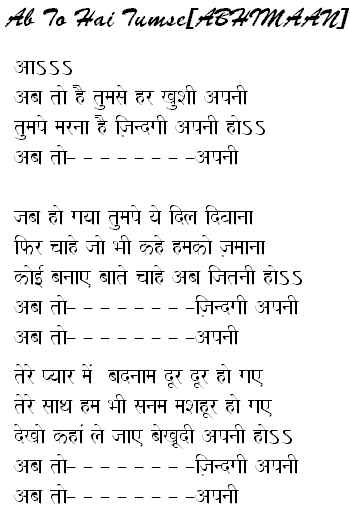
Abhimaan Ab To Hai Tumse
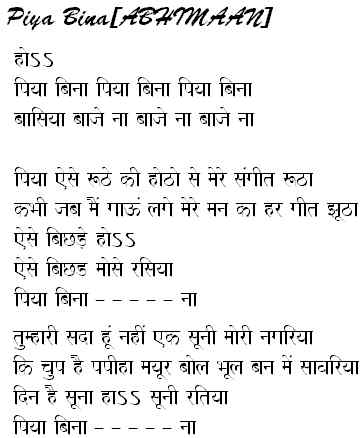
Abhimaan Piya Bina
Abhimaan Nadiya Kinare
Adaalat Jaana Tha Ham Se Door
Adalat Yu Hasaraton Ke Daag
Adalat Unko Yeh Shikayat
Afsana Abhi To Mein Jawan Hoon
Agar Tum Na Hote Agar Tum Na Hote
Albela Balma Bada Nadaan
Albela Dheere se Aaja Ri
Alif Laila Bahar Aayi Khili
Amar Jaane Wale Se Mulaqat
Amar Prem Raina Beeti Jaye
Amrapali Jao Re Jogi
Amrapali Neel Gagan Ke Chaon Mein
Amrapali Tadap Yeh Din Raat Ki
Amrapali Tumhe Yaad Karte-Karte
Anand Na Jiya Lage Na
Anand Math Vande Mataram
Anamika Bahon Mein Chale Aao
Anari Woh Chand Khila
Anarkali Yeh Zindagi Usiki Hai
Anarkali Aaja Ab to Aaja
Anarkali Duwa Kar Gam-E-Dil
Andaz Uthaye Ja Unke Sitam
Andhiyan Hein Kahin Par
Anhoni Is Dil Ki Halat
Ankhen Gairon Pe Karam Apno Pe Sitam
Ankhen Milti Hai Zindagi Mein
Annadata Jiya Lage Na.. Nis Din Nis Din Mera
Annadata Raaton Ke Saye
Anokha Pyar Ek Dil Ka Lagana Baki Tha
Anokhi Raat Mahalon Ka Raja..Rani Beti Raj Karegi
Anpadh Aap Ki Nazron Ne Samjha
Anpadh Hain Isi Mein Pyar Ki Aabroo
Anpadh Jeeya Le Gayo Re Mora Savariya
Anupama Dheere-Dheere Machal Aye-Dil-e-Bekarar
Anupama Kuch Dil Ne Kaha, Kuch Bhi Nahi
Anuradha Sanware Sanware
Anuradha Haye Re Woh Din Kyun Na Aye
Apne-Paraye Halke Halke Ayee Chalke
Asha Sheesha Ho Ya Dil Ho
Asli Naqli Tere Mera Pyaar Amar
Awara Aa Jao.. Ab Raat Guzarne Wali Hain
Awara Ghar Aaya Mera Pardesi
Azad Radha Na Bole Na Bole
Azad Apalam Chapalam
Badi Bahen Chale Jaana Nahin
Badi Bahu Badali Teri Nazar
Bahana Jare Badra Bairi Ja
Baharon Ke Sapne Aaja Piya Tohe Pyar Doon
Baharon Ke Sapne Kya Janoon Sajan
Baharon Ke Sapne O Mere Sajna O Mere
Bahu Begum Duniya Kare Sawal
Baiju Bawra Bachpan Ki Mohabbat
Baiju Bawra Mohe Bhool Gaye
Barsaat Barsaat Mein Humse Mile Tum Sajan
Barsaat Jiya Beqaraar Hai
Basant Bahar Ja Re Ja Re Balamwa
Basant Bahar Main Piya Teri
Bawarchi More Naina Bahayen Neer
Bazaar Dikhayi Diye Ki Bekhud Kiye
Bazar Sajan Ki Galiyan
Bees Saal Baad Kahin Deep Jale Kahin Dil
Bemisal Aye Re Pawan Dhoonde Kise
Bewafa Se Wafa Hum Jaise Kahi Aapko Dilbar
Bhabhi Ki Chuudiyann Jyoti Kalash Chhalake
Bharosa Woh Dil Kaha Se Laoon
Black Cat Main Tumhi Se Poonchhati Hoon
Bobby Akhiyon Ko Rehne Do
Buddha Mil Gaya Jiya Na Lage More
Call Girl Ulfat Mein Zamane Ki Har
Caravan Dilbar Dil Se Pyare
Chacha Zindabad Bairan Neend Na Aaye
Challia Teri Rahon Mein Khade Hain
Champakali Chup Gaya Koi Re
Chand Ka Tukda Aaj Radha Ko Sham Yaad Aa Gaya
Chandni Mere Haathon Mein
Char Dil Char Rahen Intazaar Aur Abhi
Chhote Nawab Ghar Aja Ghir Aye
Chhoti Si Mulaqat Kal Nahin Paaye Ja
Chhoti Si Baat Na Jaane Kyon
ChitraLekha Sansar Se Bhage Phirte Ho
Chori Chori Panchi Banu Urati Phiru
Chori Chori Rasik Balma
Chupke Chupke Ab Ke Sajan Sawan Mein
Chupke Chupke Chupke Chupke Chal Ri Purvaiya
Daag Jab Bhi Ji Chahe
Dastak Baiyan Na Dharo
Dastak Maai Ri
Dard Ah-le-Dil Yuhi Chupa Lete Hai
Dard Na Jaane Kya Hua Jo Tune
Dard Ka Rishta Main Pariyon Ki Shehzadi
Dekh Kabira Roya Meri Veena Tum Bin Roye
Devta Kaise Aaoon Jamuna Ke Teer
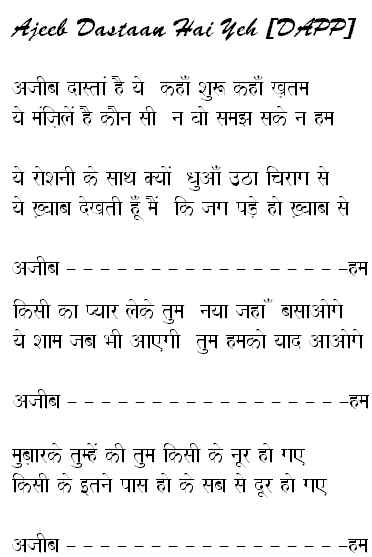
Dil Apna Preet Parayee Ajeeb Dastaan Hai Yeh
Dil Ek Mandir Ruk Ja Raat
Dil Ne Phir Yaad Kiya Saare Shehar Mein Charcha
Dil Ne Pukara Khai Thi Kasam
Dil Se Diya Jale
Dilwale Dulhaniya Le Jayenge Mere Khabon Mein Jo Aaye
Do Ankhen Barah Haath Aao Honhar Bachon.. To Kya Karoge
Do Ankhen Barah Haath Aye- Mallik Tere Bande Hum
Do Ankhen Barah Haath Saiyan Jhoote Ka Bara Sartaj
Do Raaste Bindiya Chamkegi
Dostana Kitna Aassa Hain Kehna Bhool Jayo
Dr. Vidya Pawan Diwani Na Mane
Dulha Dulhan Humne Tujhko Pyar Kiya Hai Jitna
Dushman Chithi Na Koi Sandesh
Ek Kali Muskayee Na Tum Bewafa Ho
Ek Mahal Ho Sapnon Ka Dil Mein Kisi Ke Pyar Ka
Faraar Pyar Ki Dastan
Fifty Fifty Chal Diya
Ganga Jamuna Do Hanso Ka Joda
Ganga Ki Saugandh Mano To Main Ganga Maa Hoon
Gateway of India Sapne Mein Sajan
Gazal Nagma-o-Sher Ki Saugat
Geet Tere Naina Kyon Bhar
Ghar Aaj Kal Paon
Ghar Tere Bina Jiya
Guide Aaj Phir Jeene Ki
Guide Piya Tose Naina Lage
Guide Saiyan Be-imaan
Haqeeqat Zara Si Aahat Hoti Hai
Heer Ranjha Do Dil Toote
Heer Ranjha Milo Na Tum To Hum Ghabarye
Hero Nindiya Se Jaagi Bahar
Hindustan Ki Kasam Hain Tere Saath Meri Waffa
House No.44 Phaili Hui Hain Sapnon Ki Bahein
Humrahi Man Re, Tu Hi Bata Kya Gawu
Hum Dono Allah Tero Naam
Hum Aapke Hain Kaun Choclate, Lime-Juice,Ice-Cream
Hum Aapke Hain Kaun Lo Chali Main Apne Devar Ki Baraat
Hum Aapke Hain Kaun Mai Ni Mai Munder Pe Teri
Intequam Aa Jaane Ja
Jaal Chandni Raatein Pyar Ki Baatein
Jab Jab Phool Khilen Yeh Sama, Sama Hai Yeh Pyar Ka
Jab Yaad Kisi Ki Aati Hai Jab Yaad Kisi Ki Aati Hai
Jaagte Raho Jaago Mohan Pyare
Jai Ambe Jai Ambe.. Singhvahani Shaktidayani
Jalti Nishani Ruth Ke tum to Chal Diye
Jani Dushman Tere Haathon Mein Pehna Ke
Jewel Thief Hoton Pe Aaisi Baat
Jewel Thief Rula Ke Gaya Sapna Mera
Jhanak Jhanak Payal Baje Mere Aye Dil Bataa
Jhanak Jhanak Payal Baje Saiya Jaaon
Julie Yeh Ratein Nayi-Purani
Junglee Ehsaan Tera Hoga Mujh Par
Jyoti Hamari...Thoda Resham Lagta Hain,Thoda Sheesha
Kabhi Khushi Kabhie Gham Kabhi Khushi Kabhie Gham
Kabhie-Kabhie Kabhie-Kabhie
Kabhie-Kabhie Mere Ghar Aayi Ik Nanhi Pari
Kacche Dhaage Tere Bin Nahi Jeena Mar Jana
Kathputli Bol Re Kathputli Dori Kaun Sang Bandhi
Kati Patang Na Koi Umang Hai
Karan Arjun Ik Munda Meri Umar Da
Kavi Kalidas Sham Bhayi Ghansham Na Aaye
Khamoshi Humne Dekhi Hain
Khandaan Yeh Mulalqat Ik Bahana Hai
Khel Jaate Ho To Jaaoo
Kohra Jhoom Jhoom Dhalati Raat
Kudrat Tune O Rangeele Kaisa Jaadu Kiya
Ladli Tumhare Bulane Ko
Lahore Bahare Phir Bhi Aayegi
Lajja Kaun Dagar
Lalkar Kabhi Hamne Nahi Socha
Lamhe Megha Re Megha
Lamhe Meri bindiya Teri Nindiya
Lamhe Mohe Chedo na
Lekin Kesariya Balma, Bavari Bole Log
Lekin Kesariya Balma, Ke Tumse Lage
Lekin Main Ek Sadi Se Baithi Hoon
Lekin Sunio Ji Araj Mhari
Lekin Yaara Silli-Silli
Libaas Silli Hawa Chuu Gayi
Loafer Main Tere Ishq Mein
Love In Tokyo Koi Matwala
Love In Tokyo Mujhe Tum Mil Gaye
Love In Tokyo Sayonara-Sayonara
Madhumati Aaja Re Pardesi
Madhumati Ghadi Ghadi Mora Dil
Madhumati Zulmi Sang Aankh Lagi
Mahal Aayega Aanewala
Mahal Mushkil Hai Bahut
Maine Pyar Kiya Dil Deewana Bin Sajna Ke
Malti Madhu Bhool Na Jaana
Mamta Chahe To Mora
Mamta Rahen Na Rahen Hum
Mamta Rahte The Kabhi
Mamta Vikal Mora Manwa
Manpasand Honthon Pe Geet Jage
Masoom Tujse Naraaz Nahi Zindagi
Mausam Ruke Ruke Se Kadam
Maya Jare Jare..,Panchi Baharon Ke Desh Jare
Maya Memsaab O Dil Banjare
Mehboob Ki Mehendi Jaane Kyon Log Mohabbat Kiya
Mera Gaon Mera Desh Marr Diya Jaye Ya Chodh Diya
Mera Saaya Tu Jahaan Jahaan Chalega
Mera Saaya Naino Mein Badaraa Chhaye
Milli Maine kaha Phoolon Se
Mrigtrishna Sun Man Ke Meet More Prem Geet
MR. Natwarlal Pardesiya Sub Kehte Hain
Mughal-E-Azam Khuda Nigehban Ho Tumhara
Mughal-E-Azam Mohe Panghat Pe
Mughal-E-Azam Pyar Kiya To
Mujhe Jeene Do Raat Bhi Kuchh Hein Bhigi Bhigi
Muqqadar Ka Sikander Dil To Hai Dil, Dil Ka Aitbaar
Naaz Tum Kahan Ho
Naaz Jhil Mil Sitaron Ke Tale
Nagin Jaadugar Saiyan
Nagin Man Dole Mera Tan Dole
Nagin Mera Badli Mein Chup Gaya
Nagin Mera Dil Ye Pukare
Nagin Sun Rasiya Man Basiya
Nagin Sun Ri Sakhi
Nagina Main Teri Dushman
Naseeb Mere Naseeb Mein Tu Hain Ki Nahi
Naubahar Dekho Ji Mora
Naujawan Thandi Hawaen
Nirala Mehfil Mein Jal Uthi Shamaa
Padmini Bedard Tere Dard Ko
Padosan Bhai Bastoor Ab Jayenge Kitni
Pakeezah Inhi Logon Ne
Pakeezah Chalte Chalte
Pakeezah Mausam Hein Ashikana
Parakh Mila Hain Kisika Jhumka
Parakh O Sajana, Barkha Bahaar
Parchhain Katate Hain Dukh Hain
Pardesi Naa Jaa Naa Jaa Balam
Patita Kisine Apna Banake Mujhko
Paying Guest Chand Phir Nikla
Prem Parvat Yeh Dil Aur Unki Nighahon Ke Saaye
Prem Pujari Rangeela Re Tere Rang Mein
Professor Ki Padosan Mil Jhoom Ke
Pukar Ek Tu Hi Bharosa
Pyar Ka Mausam Na Ja Mere Hum-dum
Rajkumar Aaja Aai Bahar Dil Hai Bekarar
Ram Avtaar Ungli Mein Angoothi,Angoothi Mein Nagina
Ram Rajya Dar Lage
Ram Teri Ganga Maili Ik Radha Ik Meera Dono Ne Shyam
Ram Teri Ganga Maili Sun Sahiba Sun Pyar Ki Dhun
Ram Teri Ganga Maili Tujhe Bulaye Meri
Rani Roopmati Aa Laut Ke Aaja Mere Meet
Razia Sultan Aye Dil-E-Nadaan
Reshma Aur Shera Tu Chanda Main Chandni
Rishta Kagaz Ka Sajna Sun-Sun Teri Chabi
Roti Kapada Aur Makaan Hai Hai Yeh Mujburi
Rudaali Dil Hun-Hun Kare
Rudaali Jhoote-Moote Mitwa
Rudaali Samay Dhire Chalo
Rustom Sohrab Ae Dilruba Nazare Mila
Safar Hum The Jinke Sahare
Saiyaan Kali-Kali Raat
Sanam Bewafa Choodi Mazaa Na Degi
Sangdil Woh To Chale Gaye
Sanjog Woh Bhooli Dastaan
Sangam Main Ka Karu Ram Mujhe Buddha
Saraswati Chandra Chandan Sa Badan
Saraswati Chandra Chhod De Sari Duniya
Sargam Koi Kisi Ka Diwana Na Bane
Sati Savitri Jeevan Dor Tumhin Sang Bandhi
Satyam Shivam Sundaram Bhor Bhayi Panghat Pe
Satyam Shivam Sundaram Satyam Shivam Sundaram
Satyam Shivam Sundaram Yeshomati Maiya Se Bole
Sautela Bhai Ja Main Tose Nahin Bolun
Sazaa Tum Na Jaane Kis Jahan Mein
Seema Baat Baat Mein Rootho Na
Seema Man Mohana Bade Jhootha
Seema Suno Choti Si Gudiya Ki
Shabab Mar Gaye Hum Jeete Ji
Shabab Marna Teri Gali Mein
Shabab Jo Main Jaanti
Shabab Jogan Ban Jaoongi
Shagird Dil Vil Pyar Vyar
Sharmili Megha Chhaye Adhi Raat
Sheerin Farhad Guzra Hua Zamana Aata Nahi
Shin Shina Ki Bubalabu Tum Kya Jano
Shree 420 Eechak Dana Beechak Dana
Sunny Jaane Kya Baat Hai
Swami Pal Bhar Mein Yeh Kya Ho Gaya
Taj Mahal Jurm-E-Ulfat Pe
Talash Khai Hai Re Hamne Qasam
Talash Kitni Akeli
Tarana Beiman Tore Nainwa
Tarana Woh Din Kahaan Gaye Bataa
Taxi Driver Ae Meri Zindagi Aaj
Taxi Driver Dil Jale To Jale
Teen Batti Char Rasta Teen Deep Aur Char Dishaye,Juda-Juda ..
Ujala Tera Jalwa Jisne Dekha Woh
Uran Khatola Hamare Dil Se
Utsav Man To Nainon Mein
Woh Kaun Thi Jo Hamne Dastaan Apni Suna Di
Woh Kaun Thi Lag Ja Gale Ki Phir Yeh Hasi
Woh Kaun Thi Naina Barse Rim-Jhim
Yasmin Mujhpe Ilzaam Bewafai Hain
Zameen Aasmaan Aisa Sama Na Hota, Kuch Bhi Yaha
Zanjeer Banake Kyon Bigada Re
Zanzar Chhed Gayo Mohe
Ziddi Chanda Re Ja Re Ja Re
Zindagi Hum Pyar Ka Sauda ..Ik Baar
Zubeidaa So Gaye Hain
Zubeidaa Pyara Sa Gaon
1942 A Love Story Kuch Na Kaho
PRIVATE Aye Mere Watan Ke Logon
Monday, November 19, 2007
Amitabh Bachchan
 Early life
Amitabh Bachchan was born in the city of Allahabad (Uttar Pradesh) in a Hindu Kayastha family. His father Dr. Harivansh Rai Bachchan was a well-known Hindi poet. Amitabh's mother is a Sikh from Karachi-Pakistan.[1] Amitabh was initially named as Inquilab inspired from the phrase Inquilab Zindabad during the Indian independence struggle. He was re-christened Amitabh which means the light that would never go off. Though his last-name was Srivastava, his father had adopted the pen-name Bachchan, under which was published all his work. It is with this last name that Amitabh debuted in films, and, for all public purposes, it has become the surname of all members of the current family.
Born on 11 October 1942 at 3 am in the middle of the World War II, he is the eldest of the two sons of Dr. Harisvanshrai Bachchan. Amitabh emphasizes even today that he can never be the man his father was. His mother was very fond of stage and was also offered a role in a film after her marriage, but she preferred to become a quintessential homemaker. In a way she was responsible for Amitabh's career because she always wanted him to take the centre stage.[2]
Bachchan has a double M.A. (Master of Arts) degree. He attended Allahabad's Jnana Prabodhini, followed by Nainital's Sherwood College, where he majored in the art stream. He later went on to study at Kirori Mal College in Delhi University earning a degree in science. In his twenties, Bachchan gave up a job as freight broker for the shipping firm, Bird and Co., based in Calcutta, to pursue a career in acting.
He married actress Jaya Bhaduri on June 3, 1973 according to Bengali rites. The couple have two children: daughter Shweta and son Abhishek.
Early career: 1969-1972
Amitabh Bachchan made his film debut in 1969 as one of the seven protagonists in Saat Hindustani. The movie was not a financial success but Bachchan won his first National Film Award for Best Newcomer.[3] The critically acclaimed and commercially successful Anand (1970) followed, where he starred alongside Rajesh Khanna the First Superstar of Indian silver screen. Bachchan held his own despite playing a supporting role, and won a Filmfare Best Supporting Actor Award for his intense performance.
Anand was followed by many unsuccessful films such as Reshma Aur Shera (1971) and Parwaana (1971). In 1972 he had a hit with the multi-starrer road comedy Bombay to Goa. Then came 1973, and the start of the road towards the iconic status he would eventually come to hold for millions worldwide.
Stardom: 1973-1983



Bachchan's first major box office success came when director Prakash Mehra cast him in the leading role for his film Zanjeer (1973). The movie was a sharp contrast to the romantic-themed ones that had generally preceded it, and established Amitabh in a new persona – the "angry young man" action hero of Bollywood. The next decade catapulted him to the pinnacle of Bollywood superstardom. He churned out at least one major hit every year, including Deewaar (1975), Sholay (1975) Trishul (1978), Muqaddar Ka Sikander (1978), Don (1978), Kasme Vaade (1978), Kaala Patthar (1979), Mr. Natwarlal (1979), Ram Balram (1980), Shaan (1980), Lawaaris (1981), and Shakti (1982)[4]
Although the above-mentioned films cemented his status as Bollywood's pre-eminent action hero, Amitabh displayed a flair for more than just action roles. His remarkable comic timing was on display in such hits as Chupke Chupke (1975), Amar Akbar Anthony (1977) and Namak Halaal (1982). He was also successful as a romantic lead, with particularly notable performances in Kabhie Kabhie (1976) and Silsila (1981). In 1982 he nearly fatally injured in the intestines while filming Coolie. His accident received wider world coverage and hit the headlines in the UK something unheard of at the time and many Indians prayed in temples or offered to sacrifice their won limbs to save him. Nevertheless he spent many months recovering and resumed filming later that year after a long period of recooperation. The film was released in 1983 and due to the huge publicity of Bachchan's accident, the film was a box office success.[5]
Political career: 1984-1987
In 1984, Amitabh took a break from acting and briefly entered politics in support of long-time family friend, Rajiv Gandhi. He contested Allahabad's Parliament seat against H. N. Bahuguna, a well-known politician, and won his MP candidacy by the highest victory margin ever for a parliamentary candidate in Indian history (68.2% of the vote).[6] His political career, however, was short-lived: He resigned after three years, leaving his term incomplete. The resignation followed Bachchan's implication and that of his brother in the 'Bofors scandal' by a newspaper, which he vowed to take to court.[7] Bachchan was eventually found not to be guilty of involvement in the ordeal. His old friend Amar Singh helped him during a financial crisis due to the failure of his company ABCL. Therefore Bachchan started to support Amar Singh's political party, the Samajwadi party. Jaya Bachchan joined Samajwadi Party and became a Rajya Sabha Member.[8] Bachchan has continued to do favours for the Samajwadi party, including adverts and political campaigns. This has recently got him into trouble again in the Indian courts for false claims, this is after a previous fiasco of submission of legal papers by him stating that he is a farmer.[9]
The 15-year press ban
Very few are aware of the ban on Bachchan – a somewhat self-imposed ban. Stardust and some the film magazines got together to form an association and banned Bachchan for 15 years during his peak. They decided not to print anything about Bachchan, in any of their publications. Bachchan had said that he had banned the press from entering his sets almost till the end of 1989. However, he had nothing personal against any particular magazine.[10] It has been said that Bachchan had banned certain publications because he disliked what was being published about him and as such he vetoed them in an attempt to get them to conform.
Career slump and brief retirement: 1988-1992
In 1988, Bachchan returned to films after a three year stint in politics and played the title role in Shahenshah, which was a box office success due to the hype of Bachchan's comeback.[11] After the success of his comeback film however, his star power began to wane as all of his subsequent films failed at the box office. The 1991 hit film Hum looked like it might reverse this trend, but the momentum was short-lived as his string of box office failures continued. Notably, despite the lack of hits, it was during this period that Bachchan won his second National Film Award, for his memorable performance as a Mafia don in the 1990 film Agneepath. These years would be the last he would be seen on screen for some time. After the release of Khuda Gawah in 1992, Bachchan went into semi-retirement for five years. In 1994 one of his delayed films Insaniyat was released but was also a box office failure.[12]
Producing career and acting comeback 1996-1999
Bachchan turned producer during his temporary retirment period and setup Amitabh Bachchan Corporation, Ltd. (A.B.C.L.) in 1996 with the vision of becoming a 10 billion rupees (approx 250 million $US) India's premier entertainment company by the year 2000. ABCL's strategy was to introduce products and services covering the entire section of the India's entertainment industry. It's operations were mainstream commercial film production and distribution, audio cassettes and video discs, production and marketing of television software, celebrity and event management. Soon after the company was launched in 1996, the first film produced by the company was Tere Mere Sapne which failed to do well at the box office but launched the careers of actors such as Arshad Warsi and South films superstar Simran. ABCL produced a few other films none of which did well.
In 1997, Bachchan attempted to make his acting comeback with the film Mrityudaata, produced by ABCL. Though Mrityudaata attempted to reprise Bachchan's earlier success as an action hero, like most of ABCL ventures, the film was a failure both financially and critically. ABCL was the main sponsor of the The 1996 Miss World beauty pageant, Bangalore and lost millions due to the poor management of the event. The fiasco and the consequent legal battles surrounding ABCL and various entities after the event, coupled with the fact that ABCL was reported to have overpaid most of its top level managers, eventually led to its financial and operational collapse in 1997. The company went into administration and was later on declared as a failed company by Indian Industries board. The Bombay high court, in April 1999 restrained Bachchan from selling off his Bombay bungalow 'Prateeksha' and two flats till the pending loan recovery cases of Canara Bank were disposed of. Bachchan had, however, pleaded that he had mortgaged his bungalow to Sahara India Finance for raising funds for his company.[13]
Bachchan later attempted to revive his acting career and had average success with Bade Miyan Chote Miyan (1998)[14] and received positive reviews for Sooryavansham (1999)[15] but most, however, then believed that Bachchan's glory days were over as all his other films such as Lal Baadshah (1999) and Hindustan Ki Kasam (1999) were box office failures.
Television career
In the year 2000, Bachchan stepped up to host India's adaptation of the British television game-show, Who Wants to Be a Millionaire? entitled, Kaun Banega Crorepati (KBC). As it did in most other countries where it was adopted, the program found immediate and profound success, in no small part due to Bachchan's charisma. It is believed that Bachchan charged a whopping Rs 25 lakhs (2.5 million Indian Rupees, approximately US$60,000 ) per weekly episode which strengthened Bachchan and his family both financially and morally after the setbacks that he had to cope after ABCL's collapse. The Canara Bank also withdrew its law suit against Bachchan in November 2000. Bachchan hosted KBC till November 2005, and its success set the stage for his return to film popularity.
Return to prominence: 2000-present

In 2000, Amitabh Bachchan regained his prominence when he appeared in Yash Chopra's box-office super hit, Mohabbatein directed by Aditya Chopra, in which he played a stern, older figure that rivalled the character of India's current heartthrob, Shah Rukh Khan. Audiences appreciated Bachchan's work, as he played a character whose age approximately mirrored his own and also because his character in the movie very much matched his pre-established image of angry-(no-longer)young-man. Other hits followed, with Bachchan appearing as an older family patriarch in Ek Rishtaa: The Bond of Love (2001), Kabhi Khushi Kabhie Gham (2001) and Baghban (2003). As an actor, he continued to exploit a range of characters suiting with his profile, receiving critical acclaim for his performances in Aks (2001), Aankhen (2002), Khakee (2004), Dev (2004) and Black (2005). Taking advantage of this resurgence, Amitabh started endorsing a variety of products and services, appearing in many television and billboard advertisements. In 2005 and 2006 he starred with his son Abhishek in the hit films Bunty Aur Babli (2005), the Godfather tribute Sarkar (2005), and Kabhi Alvida Na Kehna (2006). All of them have been very successful at the box office.[16][17] His later releases in 2006 and early 2007: Baabul (2006),[18] Eklavya and Nishabd (2007) failed to do well at the box office but his performances in each of them have been appreciated by critics.[19] He also made a guest-appearance as himself in the Kannada movie Amruthadaare directed by Nagathihalli Chandrashekhar.
On May 25, 2007 two of his films Cheeni Kum and the multi-starrer Shootout at Lokhandwala were released. Shootout at Lokhandwala did very well at the box office and was declared a hit in India[20] and Cheeni Kum picked up after a slow start and has been declared an overall average hit.[21] He then made a special appearance as the narrator in Jhoom Barabar Jhoom which released in June.
On 31 August 2007, he starred in the remake of his biggest hit Sholay (1975) which was titled Ram Gopal Varma Ki Aag. He played the role of the villain Babban (originally Gabbar Singh) who was played by the late actor Amjad Khan in the 1975 original. The film proved to be a disaster at the box office[22] and was also poorly received by critics.
His first English language film The Last Lear premiered at the 2007 Toronto International Film Festival on September 9, 2007. He received positive reviews from critics who hailed his performance as his career best.[23] On the sets of " The Last Lear" Bachchan turned dialogue writer and penned down some on-the-spot Hindi dialogues.[24]
Bachchan is also going to play a supporting role in his first international film titled Shantaram which is directed by Mira Nair and stars Hollywood actor Johnny Depp in the lead.[25]
Health
1982 injury during filming
While filming Coolie in 1982, Bachchan was seriously injured during the filming of a fight scene with co-actor Puneet Issar.[26] He was in the hospital with a ruptured intestine for months, and at times was close to death. A remarkable outpouring of support and concern by his fans and the nation in general followed. After recovering, Bachchan resumed shooting for Coolie, and it finally released as a huge success owing to its pre-release publicity.[5]
The director, Manmohan Desai altered the ending for Coolie after Bachchan's accident. Bachchan's character was originally intended to have been killed off but after the change of script, the character lived in the end. It would have been inappropriate, said Desai, for the man who had just fended off death in real life to be killed on screen. Also, in the released film the footage of the fight scene is frozen at the critical moment, and a caption appears onscreen marking this as the instant of the actor's injury and the ensuing publicity of the accident. While filming an action scene,[27] Bachchan was doing his own stunts. He had to fall onto a table and then on the ground. But when he jumped towards the table, the corner of the table hit his abdomen. He had a splenic rupture and lost a large amount of blood. He was flown out and needed urgent operation (splenectomy) and was critically ill for a while. A rumor spread that he had died from the accident. The nation (most of it anyway) mourned. Later there were mile-long queues of well-wishing fans outside the hospital where he was recuperating.[28]
Illness
Later, he was struck with an illness called Myasthenia Gravis. This happened either because of the heavy medication that he took during his Coolie accident or because of the blood transfusion that he had received. This illness made him feel weak both mentally and physically and he decided to quit films. He had become very pessimistic about everything and just couldn’t handle the pressure of a new film’s release every Friday. Before every release he would say, "Yeh film to flop hogi!" ("This film will flop").[29]
2005 Hospitalisation
In November 2005, Amitabh Bachchan was admitted to Lilavati Hospital's ICU once more, to undergo surgery for diverticulitis of the small intestine.[30] This occurred after Bachchan complained of pains in his abdomen some days prior. During the period and that following his recovery, most of his projects were put on hold, including the television show he was in the process of hosting, Kaun Banega Crorepati. India also appeared to come to a standstill, with celebrity after celebrity visiting him to offer well-wishes and prayers. News of the incident saturated coverage across Newspapers and TV news channels. Amitabh returned to work in March 2006.[31]
Voice
Bachchan is said to have one of the finest voices in Bollywood. His deep and rich voice has contributed to many a movie becoming major hits in Bollywood. He has been a narrator, a playback singer and presenter for countless programs since. One of the greatest film directors of the twentieth century Satyajit Ray was so impressed with Bachchan that he decided to use his voice as commentary in Shatranj Ke Khiladi since he did not find any suitable role for him.[32] But before entering the film industry, Bachchan applied for a job with All India Radio for the post of a news announcer. It is ironic that though he is now known for his powerful, baritone voice, he was inexplicably turned down.[33]
Filmography
Actor
| Year | Film | Role | Notes |
|---|---|---|---|
| 1969 | Saat Hindustani | Anwar Ali Anwar | Winner, National Film Award for Best Newcomer |
| Bhuvan Shome | Commentator (Voice) | ||
| 1971 | Parwaana | Kumar Sen | |
| Anand | Dr. Bhaskar K. Bannerjee/Babu Moshai | Winner, Filmfare Best Supporting Actor Award | |
| Reshma Aur Shera | Chotu | ||
| Guddi | Himself | ||
| Pyar Ki Kahani | Ram Chandra | ||
| 1972 | Sanjog | Mohan | |
| Bansi Birju | Birju | ||
| Piya Ka Ghar | Guest appearance | ||
| Ek Nazar | Manmohan Akash Tyagi | ||
| Bawarchi | Narrator | ||
| Raaste Ka Patthar | Jai Shankar Rai | ||
| Bombay to Goa | Ravi Kumar | ||
| 1973 | Bada Kabootar | Guest appearance | |
| Bandhe Haath | Shamu & Deepak | Double role | |
| Zanjeer | Inspector Vijay Khanna | Nominated, Filmfare Best Actor Award | |
| Gehri Chaal | Ratan | ||
| Abhimaan | Subir Kumar | ||
| Saudagar | Moti | ||
| Namak Haraam | Vikram (Vicky) | Winner, Filmfare Best Supporting Actor Award | |
| 1974 | Kunwara Baap | Augustine | Guest appearance |
| Dost | Anand | Guest appearance | |
| Kasauti | Amitabh Sharma (Amit) | ||
| Benaam | Amit Srivastav | ||
| Roti Kapda Aur Makaan | Vijay | ||
| Majboor | Ravi Khanna | ||
| 1975 | Chupke Chupke | Sukumar Sinha/Parimal Tripathi | |
| Faraar | Rajesh (Raj) | ||
| Mili | Shekhar Dayal | ||
| Deewar | Vijay Verma | Nominated, Filmfare Best Actor Award | |
| Zameer | Baadal/Chimpoo | ||
| Sholay | Jai (Jaidev) | ||
| 1976 | Do Anjaane | Amit Roy/Naresh Dutt | |
| Chhoti Si Baat | Special appearance | ||
| Kabhie Kabhie | Amit Malhotra | Nominated, Filmfare Best Actor Award | |
| Hera Pheri | Vijay/Inspector Hirachand | ||
| 1977 | Alaap | Alok Prasad | |
| Charandas | Qawwali singer | Special appearance | |
| Amar Akbar Anthony | Anthony Gonzalves | Winner, Filmfare Best Actor Award | |
| Shatranj Ke Khiladi | Narrator | ||
| Adalat | Dharma/Thakur Dharam Chand & Raju | Nominated, Filmfare Best Actor Award. Double role | |
| Imaan Dharam | Ahmed Raza | ||
| Khoon Pasina | Shiva/Tiger | ||
| Parvarish | Amit | ||
| 1978 | Besharam | Ram Kumar Chandra/ Prince Chandrashekar | |
| Ganga Ki Saugandh | Jeeva | ||
| Kasme Vaade | Amit/Shankar | Double role | |
| Trishul | Vijay Kumar | Nominated, Filmfare Best Actor Award | |
| Don | Don/Vijay | Winner, Filmfare Best Actor Award. Double role | |
| Muqaddar Ka Sikandar | Sikandar | Nominated, Filmfare Best Actor Award | |
| 1979 | The Great Gambler | Jay/Inspector Vijay | Double role |
| Golmaal | Himself | Special appearance | |
| Jurmana | Inder Saxena | ||
| Jurmana | Inder Saxena | ||
| Manzil | Ajay Chandra | ||
| Mr. Natwarlal | Natwarlal/Avtar Singh | Nominated, Filmfare Best Actor Award & Filmfare Best Male Playback Award | |
| Kaala Patthar | Vijay Pal Singh | Nominated, Filmfare Best Actor Award | |
| Suhaag | Amit Kapoor | ||
| 1980 | Do Aur Do Paanch | Vijay/Ram | |
| Dostana | Vijay Varma | Nominated, Filmfare Best Actor Award | |
| Ram Balram | Inspector Balram Singh | ||
| Shaan | Vijay Kumar | ||
| 1981 | Chashme Buddoor | Special appearance | |
| Commander | Guest appearance | ||
| Naseeb | Ravi | ||
| Barsaat Ki Ek Raat | ACP Abhijeet Rai | ||
| Lawaaris | Heera | Nominated, Filmfare Best Actor Award | |
| Silsila | Amit Malhotra | Nominated, Filmfare Best Actor Award | |
| Yaraana | Kishan Kumar | ||
| Kaalia | Kallu/Kaalia | ||
| 1982 | Satte Pe Satta | Ravi Anand/Babu | |
| Bemisaal | Dr. Sudhir Roy & Adhir Roy | Nominated, Filmfare Best Actor Award. Double role | |
| Desh Premee | Master Dinanath & Raju | Double role | |
| Namak Halaal | Arjun Singh | Nominated, Filmfare Best Actor Award | |
| Khud-Daar | Govind Srivastav/Chotu Ustad | ||
| Shakti | Vijay Kumar | Nominated, Filmfare Best Actor Award | |
| 1983 | Nastik | Shankar (Sheru)/Bhola | |
| Andha Kanoon | Jan Nissar Akhtar Khan | Nominated, Filmfare Best Supporting Actor Award. Guest appearance | |
| Mahaan | Rana Ranveer, Guru, & Inspector Shankar | Triple role | |
| Pukar | Ramdas/Ronnie | ||
| Coolie | Iqbal A. Khan | ||
| 1984 | Inquilaab | Amarnath | |
| Sharaabi | Vicky Kapoor | Nominated, Filmfare Best Actor Award | |
| 1985 | Giraftaar | Insp. Karan Kumar Khanna | |
| Mard | Raju "Mard" Tangewala | Nominated, Filmfare Best Actor Award | |
| 1986 | Ek Ruka Hua Faisla | Guest appearance | |
| Aakhree Raasta | David/Vijay | Double role | |
| 1987 | Jalwa | Himself | Special appearance |
| Kaun Jeeta Kaun Haara | Himself | Guest appearance | |
| 1988 | Soorma Bhopali | Guest appearance | |
| Shahenshah | Inspector Vijay Kumar Srivastav / Shahenshah | Nominated, Filmfare Best Actor Award | |
| Hero Hiralal | Himself | Special appearance | |
| Ganga Jamuna Saraswati | Ganga Prasad | ||
| 1989 | Batwara | Narrator | |
| Toofan | Toofan & Shyam | Double role | |
| Jaadugar | Goga/Gogeshwar | ||
| Main Azaad Hoon | Azaad | ||
| 1990 | Agneepath | Vijay Dinanath Chauhan | Winner, National Film Award for Best Actor & Nominated, Filmfare Best Actor Award |
| Krodh | Special appearance | ||
| Aaj Ka Arjun | Bheema | ||
| 1991 | Hum | Tiger/Shekhar | Winner, Filmfare Best Actor Award |
| Ajooba | Ajooba/Ali | ||
| Indrajeet | Indrajeet | ||
| Akayla | Inspector Vijay Verma | ||
| 1992 | Khuda Gawah | Baadshah Khan | Nominated, Filmfare Best Actor Award |
| 1994 | Insaniyat | Inspector Amar | |
| 1996 | Tere Mere Sapne | Narrator | |
| 1997 | Mrityudata | Dr. Ram Prasad Ghayal | |
| 1998 | Major Saab | Major Jasbir Singh Rana | |
| Bade Miyan Chhote Miyan | Inspector Arjun Singh & Bade Miyan | Double role | |
| 1999 | Lal Baadshah | Lal "Baadshah" Singh & Ranbhir Singh | Double role |
| Sooryavansham | Thakur Bhanu Pratap Singh & Heera Singh | Double role | |
| Hindustan Ki Kasam | Kabeera | ||
| Kohram | Col. Balbir Singh Sodi (Devraj Hathoda) & Dada Bhai | ||
| Hello Brother | Voice of God | ||
| 2000 | Mohabbatein | Narayan Shankar | Winner, Filmfare Best Supporting Actor Award |
| 2001 | Ek Rishtaa: The Bond of Love | Vijay Kapoor | |
| Lagaan | Narrator | ||
| Aks | Manu Verma | Winner, Filmfare Critics Award for Best Performance & Nominated, Filmfare Best Actor Award | |
| Kabhi Khushi Kabhie Gham | Yashvordhan "Yash" Raichand | Nominated, Filmfare Best Supporting Actor Award | |
| 2002 | Aankhen | Vijay Singh Rajput | Nominated, Filmfare Best Supporting Actor Award |
| Hum Kisise Kum Nahi | Dr. Rastogi | ||
| Agni Varsha | Indra (God) | Special appearance | |
| Kaante | Yashvardhan Rampal/"Major" | Nominated, Filmfare Best Actor Award | |
| 2003 | Khushi | Narrator | |
| Armaan | Dr. Siddharth Sinha | ||
| Mumbai Se Aaya Mera Dost | Narrator | ||
| Boom | Bade Mia | ||
| Baghban | Raj Malhotra | Nominated, Filmfare Best Actor Award | |
| Fun2shh | Narrator | ||
| 2004 | Khakee | D.C.P. Anant Kumar Shrivastav | Nominated, Filmfare Best Actor Award |
| Aetbaar | Dr. Ranveer Malhotra | ||
| Rudraksh | Narrator | ||
| Insaaf - The Justice | Narrator | ||
| Dev | D.C.P. Dev Pratap Singh | ||
| Lakshya | Col. Sunil Damle | ||
| Deewaar | Maj. Ranvir Kaul | ||
| Kyun...! Ho Gaya Na | Raj Chauhan | ||
| Hum Kaun Hai | Major Frank John Williams & Frank James Williams | Double role | |
| Veer-Zaara | Chaudhary Sumer Singh | Nominated, Filmfare Best Supporting Actor Award. Special appearance | |
| Ab Tumhare Hawale Watan Saathiyo | Major General Amarjeet Singh | ||
| 2005 | Black | Debraj Sahai | Double-Winner, Filmfare Best Actor Award & Filmfare Critics Award for Best Performance. Winner, National Film Award for Best Actor |
| Waqt: The Race Against Time | Ishwarchandra Sharawat | ||
| Bunty Aur Babli | D.C.P. Dashrath Singh | Nominated, Filmfare Best Supporting Actor Award | |
| Parineeta | Narrator | ||
| Paheli | Gadariya | Special appearance | |
| Sarkar | Subhash Nagre/"Sarkar" | Nominated, Filmfare Best Actor Award | |
| Viruddh... Family Comes First | Vidhyadhar Patwardhan | ||
| Sarkar | Subhash Nagre/"Sarkar" | ||
| Ramji Londonwaley | Himself | Special appearance | |
| Dil Jo Bhi Kahey... | Shekhar Sinha | ||
| Ek Ajnabee | Suryaveer Singh | ||
| 2006 | Family - Ties of Blood | Viren Sahi | |
| Darna Zaroori Hai | Professor | ||
| Kabhi Alvida Naa Kehna | Samarjit Singh Talwar (aka. Sexy Sam) | Nominated, Filmfare Best Supporting Actor Award | |
| Baabul | Balraj Kapoor | ||
| 2007 | Eklavya: The Royal Guard | Eklavya | |
| Nishabd | Vijay | ||
| Cheeni Kum | Buddhadev Gupta | ||
| Shootout at Lokhandwala | Dingra | Special appearance | |
| Jhoom Barabar Jhoom | Sutradhar | Special appearance | |
| Ram Gopal Varma Ki Aag | Babban Singh | ||
| The Last Lear | Harish Mishra | ||
| Om Shanti Om | Himself | Special appearance | |
| 2008 | Zamaanat | Shiv Shankar | On hold |
| God Tussi Great Ho | Post-production | ||
| Bhoothnath | Bhootnath | Releasing on January 18, 2008 | |
| Sarkar Raj | Subhas Nagre/"Sarkar" | Releasing on February 8, 2008 | |
| Exclusion | |||
| Yudh | Announced[39] |